Contemporary Faces
Identity / Self-performance / Visibility / Image / Commodification
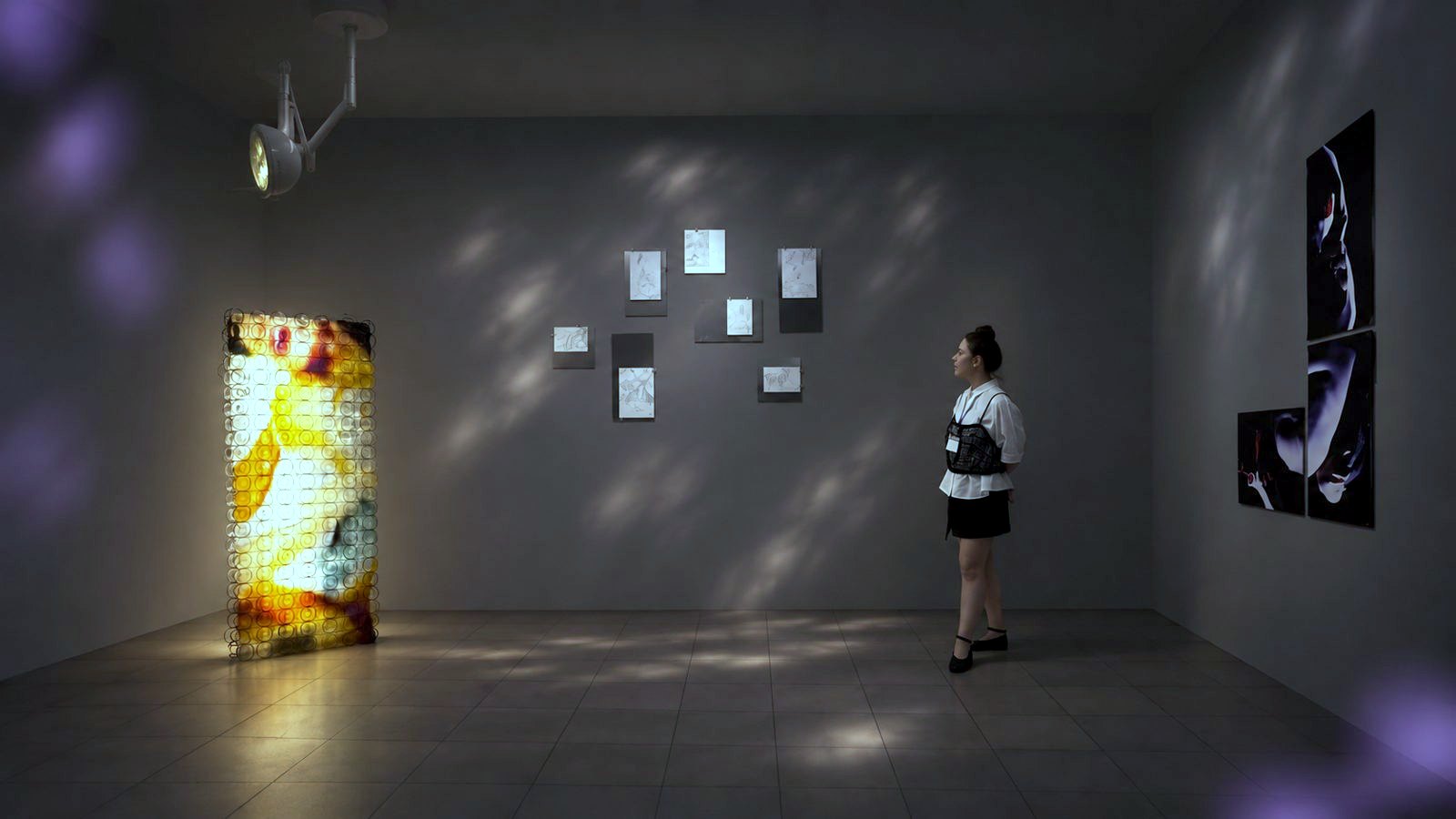
Modern Portrait is an exhibition that reconsiders the portrait not merely as a historical form, but as an existential gesture: a mirror held up to the self, the other, and the times we live in. Through a constellation of contemporary works, the show traces how the portrait—once a symbol of permanence, memory, and status—has become something far more fractured, ephemeral, and ambiguous. It asks: what does it mean to represent a person now?
Across various media and material approaches, the exhibition explores portraiture as both an anchor and a glitch—a desire to fix something that is always changing, always slipping away. In a world saturated with images, where subjectivity is simultaneously overexposed and deeply isolated, the portrait still longs to say: I was here. I felt something. I mattered.
But who is the “I”? And whose gaze are we really performing for?
Part I
Echoes of the Human: Portraiture as Time-Carrier
A portrait is never just about a face. It is a sedimentation of time, of memory, of social codes. Whether painted or pixelated, it’s always haunted—by the history of looking, by the unspoken dynamics between artist and sitter, by the particularities of class, race, gender, and habitus. The self-portrait, especially, becomes a mirror of contradictions: exposure and concealment, performance and vulnerability, authorship and absence.
Many of the works in this section echo with personal mythologies: childhood memories, inherited gestures, fractured timelines. They hint at the impossible desire to preserve what is fleeting, to make the intangible (a feeling, a shadow of the self, a moment of becoming) visible and real. There’s an ethereal quality to these portraits—they refuse to settle. They resist simplification.
Here, portraiture becomes a quiet rebellion against the speed and disposability of digital life. It returns us to slowness, to care, to the possibility of encountering another—sometimes even ourselves—without algorithmic mediation.
Part II
Persona Engine: Digital Subjects and the Performance of Self
Today, we perform ourselves for machine consumption. Our images are processed, filtered, flattened into data points—optimized for reach, engagement, visibility. What was once the space of intimate representation becomes an interface. A billboard. A mirror that responds only with more mirrors.
This section explores the fragmented, curated self in the age of digital platforms. Drawing on Groys' reading of Narcissus and Kishik's reflections on schizo-isolation, these works ask what it means to see ourselves only through our own projections—through stories written for audiences we may never meet. The artist becomes both author and product; the subject becomes brand.
Yet something bleeds through: longing, distance, loneliness. The kind of loneliness that Mark Fisher described—an emptiness not of solitude, but of saturation. In this flooded terrain, even “authenticity” becomes a tool of commerce, part of the spectacle of lifestyle: vulnerable captions, branded grief, aesthetics of transparency. What happens when our truest selves are also our most profitable?
Part III
Subcultural Bodies: Portraits from the Margins
Not all portraits seek acceptance. Some defy it. Within subcultures, portraiture still functions as ritual, camouflage, defiance, and kinship. It becomes a space to glitch normative narratives and generate new codes of belonging—new mythologies for those left out of official histories.
These works tap into Donna Haraway’s concept of making kin: forming bonds across species, identities, and systems. They reflect the strange intimacy of queer timelines, fan-made worlds, punk family portraits, avatars, and altered bodies. The digital realm, despite its capitalist infrastructure, still contains corners of collective play, mourning, and invention.
Guided by Nick Land’s cybergothic vision of breakdown and mutation, this section offers portraits that resist coherence. They’re glitchy, chaotic, soft and monstrous. They carry the charge of becoming-other.
Part IV
From Representation to Commodity: Portraiture in the Age of Lifestyle
In the final section, we enter the marketplace. The portrait, once a marker of social position or private memory, now competes with the influencer, the advert, the personal brand. The image of the self is optimized for consumption, endlessly reproduced, sold back to us as aspiration.
The tension here is sharp: between affect and attention, emotion and marketing, presence and performativity. Even grief can be aestheticized; even protest becomes style. The line between portrait and product collapses.
Drawing on Fisher’s critique of capitalist realism and Braidotti’s analysis of the posthuman condition, this section reflects on how deeply our sense of self has been shaped by the logic of commerce—where visibility is currency and identity is a tool of self-promotion.
Still, some portraits resist. Or mourn. Or simply sit with the trouble, as Haraway would say. They reveal the fractures. The silences. The deep yearning underneath all the noise.
Conclusion
Staying with the Self
Modern Portrait is not a nostalgic return to an older form of image-making. It is an attempt to make space for complexity, contradiction, and subtlety in a world that demands constant self-performance.
The portraits in this exhibition do not offer stable identities or singular truths. Instead, they reveal the many selves we carry: the public ones, the secret ones, the commodified, the remembered, the imagined. They trace the flicker between self and shadow, persona and person, image and absence.
In doing so, they ask: can we still be seen—really seen—without being sold?
More exhibitions